10 Largest Cemeteries in Africa
Cemeteries rarely make headlines, yet across Africa some of these burial grounds are so vast they function almost like small cities of their own, complete with histories that stretch back centuries and, in a few unusual cases, living residents. From a mediaeval Islamic necropolis outside Cairo to a colonial-era graveyard in the heart of Accra, here are ten of the largest cemeteries on the continent and the stories that make each one remarkable.
1. Cairo Necropolis, Egypt
Known locally as al-Qarafa and internationally as the City of the Dead, the Cairo Necropolis is widely regarded as one of the largest cemeteries on Earth, let alone in Africa. It stretches roughly six kilometres along the base of the Mokattam Hills and traces its origins back to the seventh century, when Amr ibn al-As founded it during the Muslim conquest of Egypt.
What sets it apart from almost every other cemetery on this list is that it is inhabited by the living as well as the dead, with estimates of the resident population ranging from half a million to nearly a million people who have made homes among the tombs and mausoleums.
The site is part of the UNESCO-listed Historic Cairo World Heritage area and contains everything from humble graves to the elaborate domed mausoleums of Mamluk-era sultans.
2. Zawiyyet al-Mayyiteen, Minya, Egypt
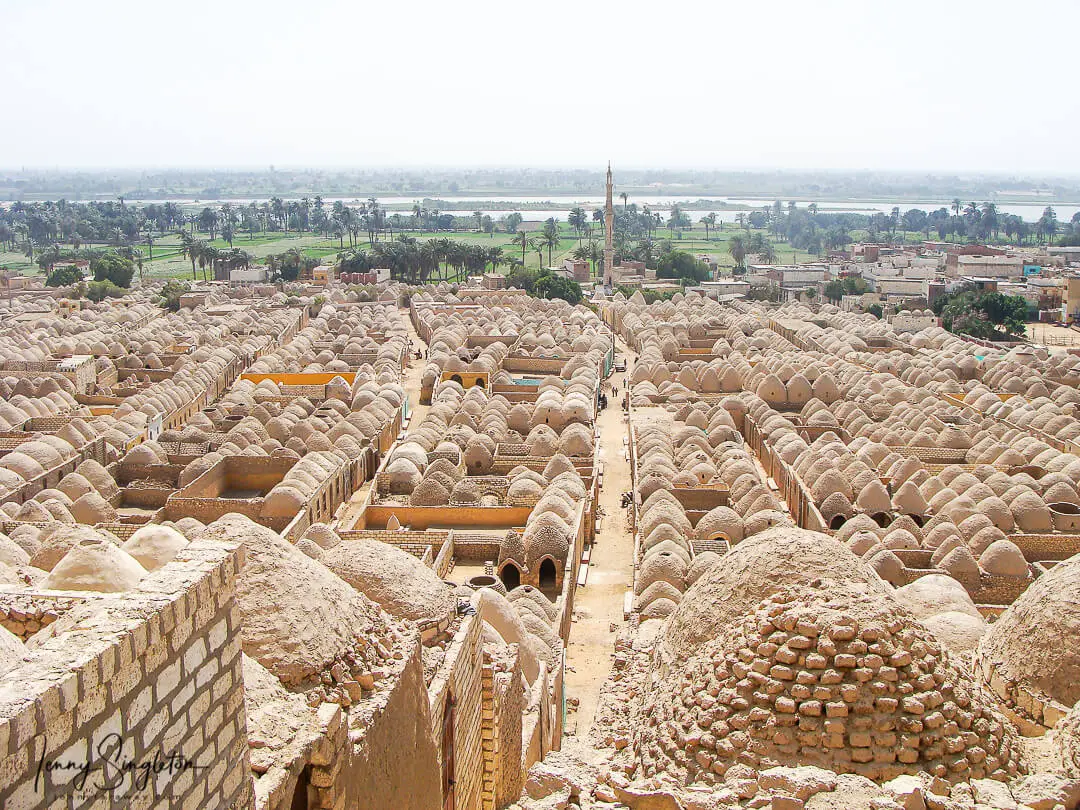
Further south along the Nile, just outside the city of Minya, lies another contender for Africa's largest burial ground. Nicknamed its own City of the Dead, this necropolis is made up of several hundred mud-brick mausolea, each topped with a distinctive white dome, spreading for kilometres across an open plain.
Both Muslims and Coptic Christians have historically been buried here, and the site also holds a handful of much older rock-cut tombs and a small step pyramid dating back to Egypt's early dynastic period, making it as much an archaeological curiosity as a functioning cemetery.
3. Avalon Cemetery, Soweto, South Africa
Avalon is the largest cemetery in South Africa and one of the most politically significant burial sites on the continent.
Opened in 1972 during apartheid as a graveyard reserved exclusively for Black South Africans, it spans about 172 hectares and holds an estimated 300,000 graves.
It is the final resting place of Hector Pieterson and Joe Slovo, among many other figures central to the liberation struggle, and its Mendi Memorial adds another layer of historical weight to a site that Johannesburg City Parks describes as a genuine epicentre of the anti-apartheid movement.
READ MORE: 10 oldest universities in Africa
4. Waterval Cemetery, Midrand, South Africa
When Waterval opened in 2006, it was the first new burial ground established in Johannesburg in nearly twenty-five years.
Covering roughly 200 hectares in the city's Region 1, it was built with enormous headroom, with space eventually planned for around 720,000 burials, making it one of the largest cemeteries by planned capacity anywhere on the continent.
5. Westpark Cemetery, Johannesburg, South Africa
Opened in 1942 on what was once a farm bought by prospectors hoping to strike gold, Westpark has grown into one of Johannesburg's most significant non-denominational cemeteries, with dedicated Christian, Jewish, Muslim, and Chinese sections.
It holds the graves of prominent post-apartheid figures, including Alfred Nzo and Joe Modise, alongside a Holocaust memorial erected in 1995, reflecting the layered, multicultural history of the city it serves.
6. Lang'ata Cemetery, Nairobi, Kenya
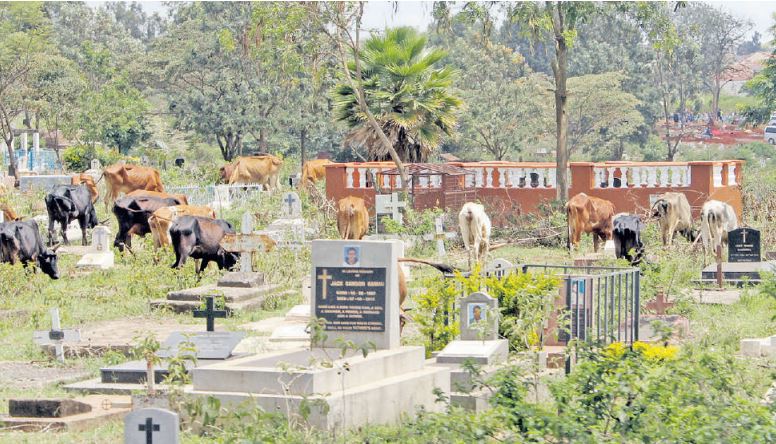
Lang'ata is Nairobi's largest public burial ground, covering around 120 acres, roughly seven kilometres from the city centre. Opened in 1958, it was officially declared full more than two decades ago, yet it continues to receive new burials daily, often with graves dug uncomfortably close to the surface or layered on top of older ones.
Despite its overcrowding, it remains the resting place of well-known Kenyans, including broadcaster Leonard Mambo Mbotela and comedian Mzee Ojwang, and city authorities have recently begun securing new land elsewhere to ease the pressure.
7. Awudome Cemetery, Accra, Ghana
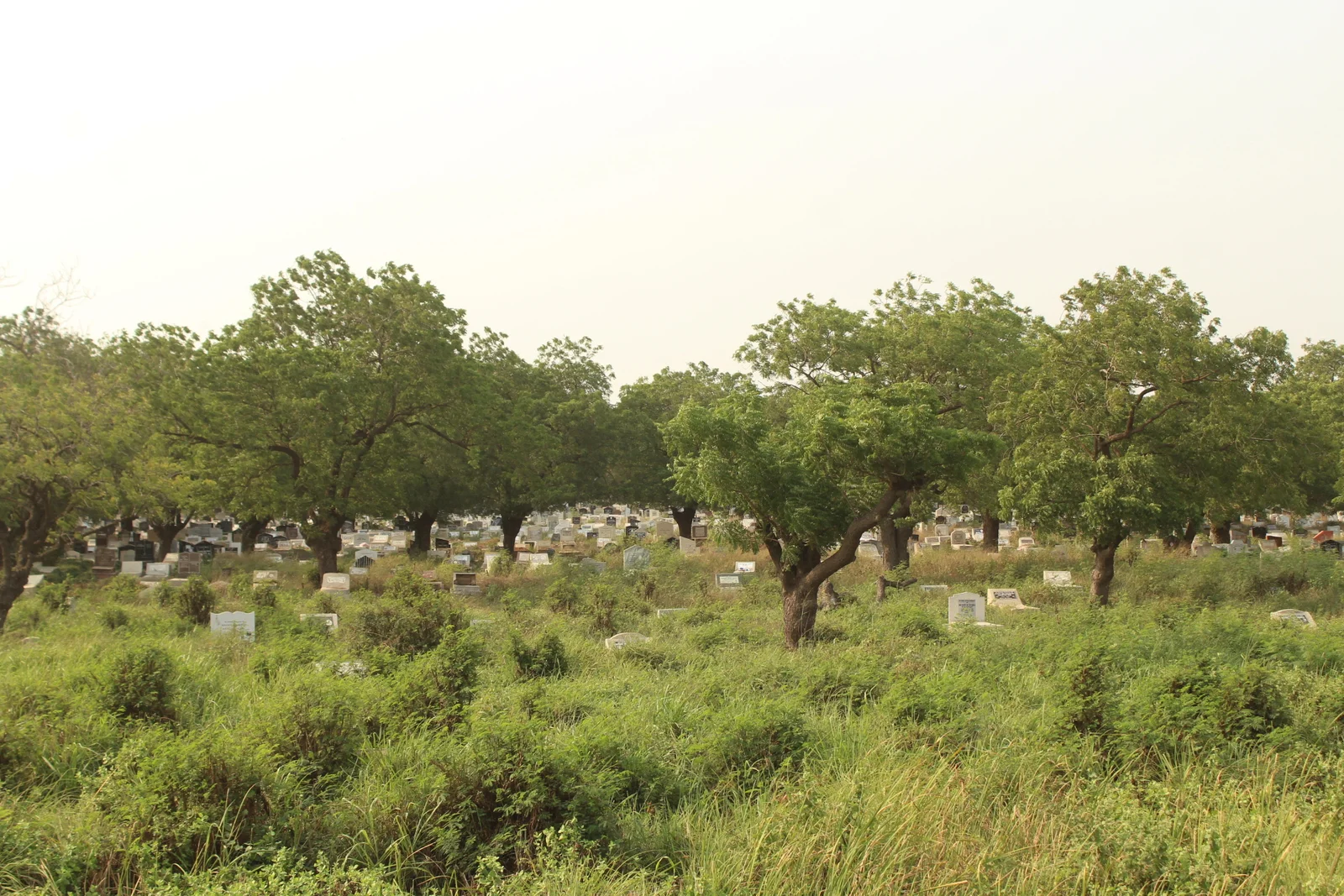
Awudome holds the title of Ghana's largest cemetery, occupying roughly 74 acres in the Kaneshie area of Accra.
Its history predates Ghanaian independence, with formal management dating back to around 1908, though the land itself was once the private estate of a local chief.
READ MORE: 10 Oldest Cities in Africa: History and founding dates
It has become the final resting place for numerous political leaders and traditional rulers and today shares the burden of central Accra's burial needs alongside its smaller neighbours, Osu and La cemeteries.
8. Osu Cemetery, Accra, Ghana
Sitting on about 25 acres, Osu Cemetery is smaller than Awudome but no less significant to Accra's daily life, handling roughly 120 burials a month according to city health officials.
It also hosts Accra's only crematorium, used mainly by foreign residents, and remains the most expensive of the capital's public cemeteries for a standard grave.
9. Atan Cemetery, Lagos, Nigeria
Located in Yaba and built by British colonial authorities in 1868, Atan Cemetery covers around 25 hectares and ranks among Nigeria's oldest and largest burial grounds.
It holds the country's largest concentration of Second World War graves, numbering about 411, alongside the resting places of notable Nigerians such as Herbert Macaulay.
A section maintained by the Commonwealth War Graves Commission sits alongside public plots, creating a striking contrast between meticulously kept war graves and an otherwise overstretched public cemetery.
10. Nairobi War Cemetery, Kenya
Smaller in scale but historically important, the Nairobi War Cemetery was established in 1941 and holds around 1,942 burials, making it the largest war cemetery in East Africa.
Maintained by the Commonwealth War Graves Commission, it commemorates Second World War casualties from across the British Empire, including soldiers from Kenya, Nyasaland, South Africa, and beyond, and stands as one of the continent's most solemn reminders of that global conflict's reach into Africa.
Together, these ten sites tell a story far bigger than burial statistics. They map colonial history, liberation struggles, urban overcrowding, and the everyday pressures African cities face in finding space for their dead, all while remaining active, evolving parts of the communities that surround them.
Edem Kwame
Chief Editor
Edem Kwame is a staff journalist at GH News Media, where he covers sports, politics, news and current affairs with a sharp focus on Ghanaian and African football.