Black Stars World Cup Exit: Why Ghana must reform its football system instead of repeating past mistakes
RINSE & REPEAT OR A RESET?
The Black Stars' disappointment is a familiar story.
We used to have talent, and they said talent alone is not enough.
Now, we don't even get the talent selected. It is a total sham.
The good news is that an overwhelming degree of our people, home and abroad, still retain an insane level of interest in the Black Stars.
People from all classes, across the political divide, young and old, invest an enormous interest in the Black Stars mainly during the African Cup or the World Cup.
As always, it commences like it did and ends as it did. High hopes, massive expectations and crashing disappointment.
Having observed the level of interest the game generates, the global recognition it offers and ultimately the revenue football makes available, do we want a repeat, or do we want a transformation?
There is no doubt that football is the most popular and lucrative sport.
Fortunately, Ghana, this small dot on the map, is incredibly advantaged as a global talent factory of this sport.
My conversation with Tom Vernon, the British football agent who established Right to Dream Academy, the institution that produced Majeed Waris, Mohammed Kudus, Ernest Nuamah, Caleb Yirenkyi, etc., will always re-echo.
To him, Ghana is only scratching the surface of the immense talent laden within.
Actually, every household in Ghana has one 14-year-old boy who is capable of becoming a $5m-valued footballer in five years, with an enabling environment.
SO WHY DO WE KEEP FAILING?
All the work in ensuring that a country has a good World Cup campaign happens when there is no World Cup happening. And this is where everyone goes to sleep.
Ghana will receive from FIFA, for qualifying and reaching the Round 32 of this World Cup, over 13 million dollars.
These funds in the hands of an honest leader or institution are enough to completely begin a fundamental overhaul of structures and set the tone for what could be.
We earned
USD 8 million in 2006
USD 14 million in 2010
USD 9.5 million in 2014
USD 10.5 million in 2022
USD 13.5 million in 2026
By the end of this month, we will have made a total of $55.5 million from our five World Cup campaigns.
This is minus the millions of dollars of sponsorships from Gold Fields Ghana, MTN, GNPC, and Engineers and Planners.
READ MORE: 'Should an alphabet determine what a good school is?' Isaac Abilla asks
Each time, there has been a promise, by the sports ministers and GFA officials, of how the money will be reinvested.
From building a three-star football hotel to the construction of an ultra-modern football centre.
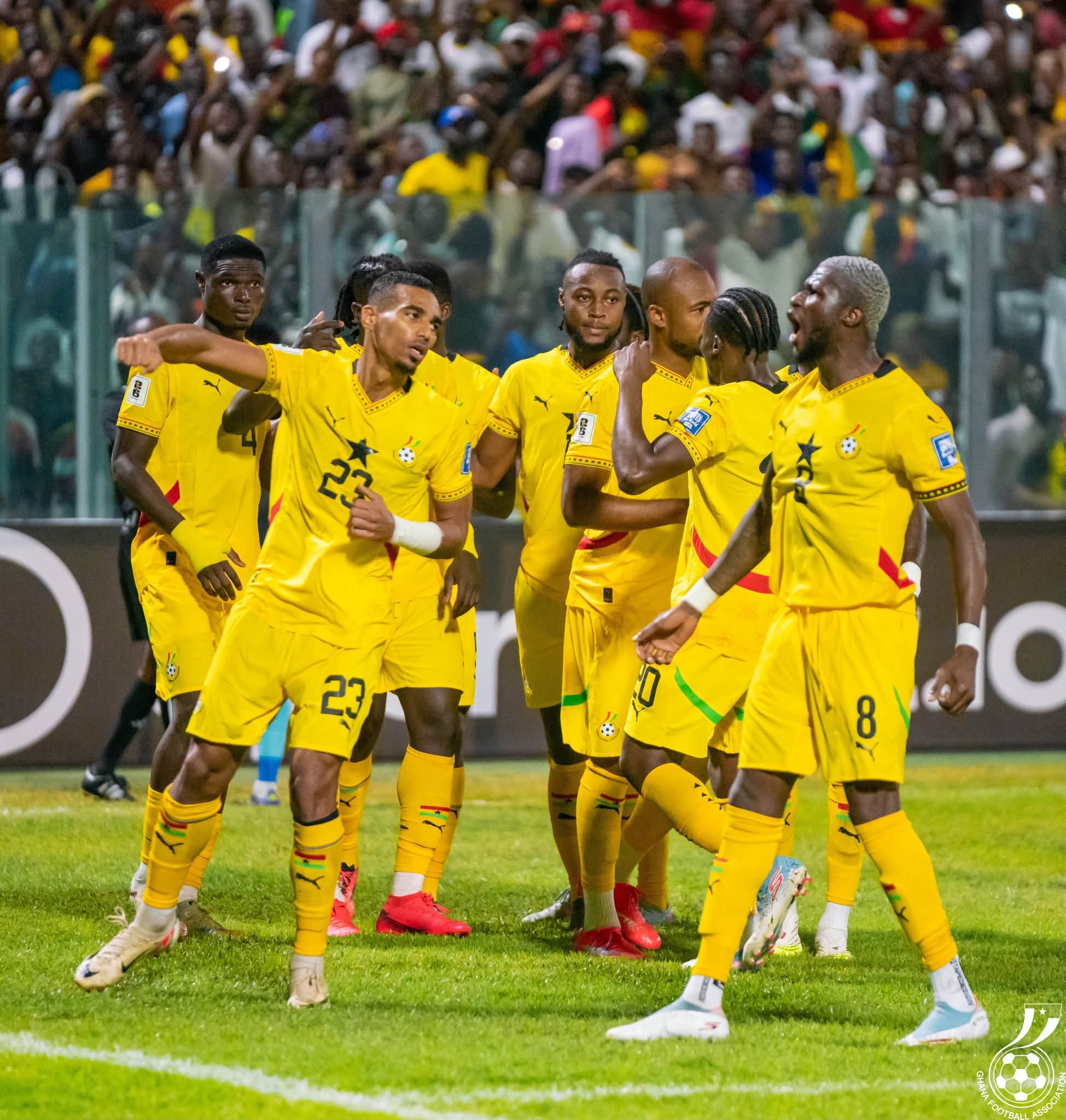
We are in 2026, which is 20 years later, and to this day, the Black Stars you watched in Kansas last night DO NOT have a single world-class training pitch in Accra or anywhere in the country where they could train when they assemble here to prepare. I did not mean a mini stadium. A common training pitch befitting a national team.
The team continues to lodge in private hotels, mixing with guests from all walks of life while preparing for games.
On the contrary, Cape Verde, whom Ghana defeated by 6-0 on aggregate to qualify for the World Cup in 2006, have, in the last ten years, transformed their game by building one of the best football complexes on the continent.
Morocco, who just defeated host nation Canada, has one of the best football training and development complexes in the world.
Ghana's football creates a fake facade to largely make individuals rich and the game continually poor.
WHERE DO WE GO FROM HERE?
1. If I have my way, a sports ministry that knows its work will ensure an allocation of at least $20 million to completely revamp Winneba Sports College or the construction of a 100-bed football house with ancillary facilities such as a medical facility, a school, swimming pools, etc.
One is in the middle belt, and one is in the southern zone.
The Ministry of Sports, the NSA and the GFA collaborate with the GES and ensure that THE PLAYERS of the JHS inter-schools, below the age of 12 from each region, begin the building process.
A total of 55 U-12 players, selected by a national team selection board from the interschools, were placed in the Northern Sector National Football House.
Another 55 are best from the South and selected and housed in the southern sector.
Selection shall strictly be by merit, devoid of cronyism and nepotism.
These two national football centres must operate as schools under the GES curriculum.
Between the ages of 12 and 15 years, they'll be housed, fed and compete in the National Third Division or Colts football during the weekends.
That team will be the Ghana National YOUNG Selection.
Here, talented young footballers from villages, poor homes with no support, get supported by the government to learn and hone their talent under a government scholarship.
There is no better way to build a player’s patriotism than selecting him at age 14 from Sefwi Wiaso MA School or Yamfo Anglican to develop his talent under government care until he earns a European move.
These are the players willing to put their necks on the line to avoid defeat and who cry their hearts out when the national team loses. It is a natural consequence.
There should be a framework to conduct mid-year exercises where non-performing players are evicted and other top kids identified through comprehensive scouting are trialled and admitted as replacements.
Best youngsters not identified through the school system should also be extensively scouted from villages, districts and local teams in order not to lose out on any quality talent.
Before they are 17, Ghanaians should be able to know who the next big thing is. Who could become the next Asamoah Gyan, Muntari or Essien?
We should be going to the stadium regularly to watch our best young talents. They should be household names. We should know our best three centre-backs before they even play at U-20.
That is how no GFA official can ship in their favourite in the thickness of night. That is the only way the public can participate in the selection process of the Black Stars from the base.
The GFA and Sports Ministry must conduct an annual competition between the Northern Sector national side and the Southern Sector side at the National Stadia, with fans in attendance.
READ MORE: Alpha Hour Convocation: Why faith is attacked while entertainment is celebrated
This is to begin building confidence and exposure even at that stage while using the exercise as a platform to monitor those with the requisite physique and psyche to be selected for the national U-15 and U-17 sides.
By age 16, the core of our national U-17 team would have played together for at least three or four years.
Transition of these players into Europe should be well controlled.
Any sale of any of these national youngsters made to European clubs should attract a determined percentage into the national coffers to help sustain the facility.
This has been the French football model.
Mbappé was selected for the French academy when he was 10, as were all the other top stars on their team.
It is not a miracle.
Laryea Kingston, John Mensah, Michael Essien and others, I once read, played for the Ghana U-13 team in the early nineties. Their cohesion was not by magic.
40% of Ghana's 2006 World Cup squad, including Muntari, Essien, Owu, Derek, John Mensah, Paintsil, Pimpong, Appiah, Pappoe, etc., mostly featured for Ghana at the U-17 to U-20 levels.
Since 2015, Ghana has failed to qualify for the U-20, which we were the first African country to win in 2009.
It has been 10 years since Ghana qualified for the U-17 World Cup, which used to be our bedrock.
So how did we end up selecting the team for our World Cup?
Fr3f3k) b) we used to call it.
Before facing Italy in the 2006 World Cup, Michael Essien, John Mensah, John Paintsil, Sulley Muntari, and Stephen Appiah, who formed the nucleus of the team, had played over 26 games together.
From U-17, U-20, the Olympic team and the Black Stars.
Our defence last night of Ati Zigi, Luckarsen, Jerome Opoku, Gideon Mensah and Senaya were playing together as a unit for the first time in their lives.
In fact, the entire lineup was playing together as a unit for the first time. A test of lineup and trial and error of this scale in the most crucial World Cup game is an unpardonable sin.
The current mode of selection where the GFA and ministry fly around countries, begging players born to Ghanaian parents in Europe, is unsustainable.
Most of these players join with little or no orientation to the typical Ghanaian game and have never played together before, resulting in ZERO team spirit, which is a critical requirement at this stage.
In order to attract talents from the Diaspora, GFA Mini offices can be established in London, Amsterdam and Hamburg.
Ex-footballers such as Tony Baffoe, Eric Addo, Essien, etc. are tasked with identifying highly talented Ghanaian-European-born talents at an early age, inviting them back home, orienting them and selecting them for the U-17 for friendly competitions. Patriotism and commitment are built from here, not when they are 30.
This is the Moroccan football model. The majority of the Moroccan players born in Europe started featuring for Morocco from the U-17 or Olympic teams. That is how they compete as a collective unit and not the disjointed side we paraded.
By the 2034 World Cup, players from the National U-14 side we assemble will be 22 years old and prime-ready for a World Cup appearance and may WIN IT someday.
I will address the issue of the collapsed National Leagues and coaching training when time permits.
It is a game; we are blessed immensely. A game we love so dearly, but a game that has been destroyed by greed and lack of direction.
Written by Saddick Adams

Edem Kwame
Chief Editor
Edem Kwame is a staff journalist at GH News Media, where he covers news, sports, politics and current affairs with a sharp focus on Ghanaian and African football.