Only 63% of Ghana's traffic lights are working - Roads Minister Agbodza reveals alarming national assessment
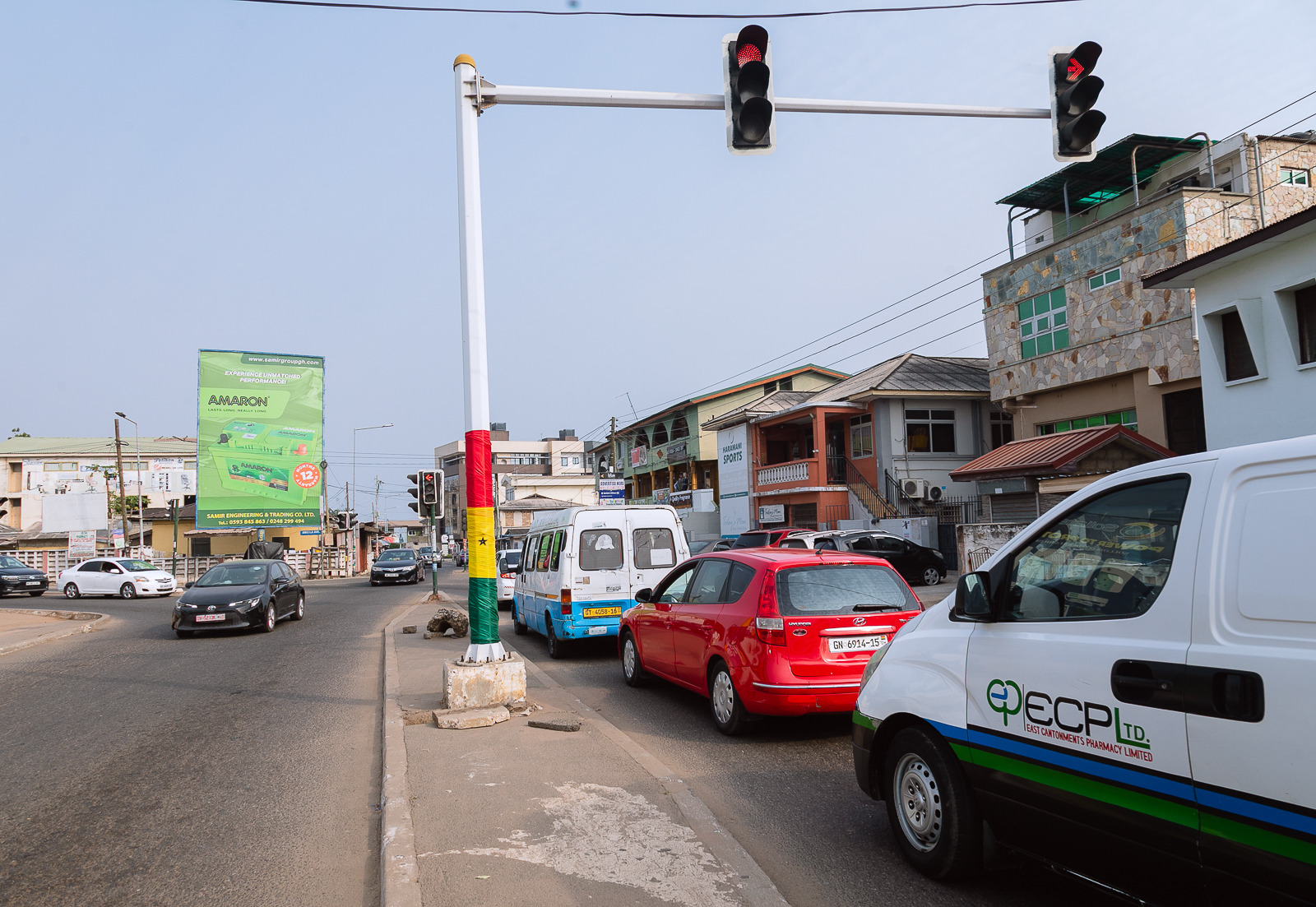
The figures paint a troubling picture of a critical piece of urban infrastructure under sustained assault from reckless drivers, organised theft syndicates, equipment obsolescence and institutional bottlenecks that have left the government owing money to the very contractors responsible for maintaining the system.
The Numbers
Of the 411 traffic signal installations across 11 regions under DUR jurisdiction, only 257, representing 63 percent are currently operational. A further 132 signals, or 32 percent, are inactive, contributing to severe gridlock at key urban intersections. An additional 22 units, representing five percent, have been permanently decommissioned due to structural damage or road redesigns.
The geographic distribution of the infrastructure is also a concern. The Greater Accra Region alone hosts 59 percent of all signals, 241 installations — while the Ashanti Region accounts for a further 15 percent with 61. Five regions currently have zero traffic lights under DUR oversight.
Remove ads
READ MORE: Patience Akyianu, former Barclays Bank Ghana MD and Hollard CEO, reportedly dies
Why Are the Lights Off?
Between 2020 and 2026, 587 distinct critical incidents disrupted the network. Vehicular crashes account for the overwhelming majority 77.5 percent or 455 incidents with reckless driving and overspeeding repeatedly destroying poles, gantries and controllers at major intersections including Okponglo, Tesano and Kasoa.
Vandalism and theft account for a further 17.4 percent of incidents 102 in total with organised syndicates actively targeting computerised controllers, solar panels, inverters, backup batteries and underground copper cables. A further 30 cases involve equipment so outdated that replacement parts are no longer manufactured.
The Awoshie-Pokuase corridor offers a stark case study of the scale of destruction. At School Junction, a violent crash obliterated the solar array and control system and resulted in a driver fatality. At Odorgono and Anyaa Market, thieves repeatedly bypassed security enclosures to strip out backup batteries and micro-controllers. Along the corridor, criminals have physically climbed overhead gantries to slice and extract specialised copper solar power delivery cables.
Institutional Bottlenecks
READ MORE: L.I. 2519: Full list of road traffic offences and jail terms in Ghana
Restoration efforts are being severely hampered by two compounding problems. Contractual disputes have stalled procurement and maintenance processes. More critically, the state currently owes maintenance contractors for previously completed works, bringing rapid-response restoration to a near standstill. Ghana is also facing a $55 million court judgement debt in relation to the Accra Intelligent Traffic Management contract — a liability that hangs heavily over the sector's modernisation agenda.
Security and Modernisation
To protect newly installed assets, the DUR is deploying heavy-duty steel burglarproof cages around control cabinets, thicker iron casing plates, lockable underground chamber slabs and strict identity protocols for authorised field technicians. Increased legal enforcement under the Road Traffic Regulations for damaging public road infrastructure is also being pursued.
On the technological front, long-term relief is being sought through intelligent traffic systems. The Area-Wide Traffic Signal Control System (AWTSCS), currently operational on the Neoplan-to-CBD corridor and funded through a French Development Agency and Government of Ghana partnership, integrates 33 smart controllers, 80 CCTV cameras and a Bus Priority System feeding into the Accra Traffic Management Centre.
However, the flagship Accra Intelligent Traffic Management System (AITMS) Phase II, which features a state-of-the-art Intelligent Tower command centre — remains only 23 percent complete due to ongoing legal disputes, with critical high-tech hardware sitting idle in storage.
Minister Agbodza, in releasing the assessment, called on the public to help protect road infrastructure, stating: "Let's work together to keep our public road traffic lights working."

Isaac Azumah Abilla
Editor
Isaac Azumah Abilla is an Editor at GH News Media covering Ghanaian politics, news, and culture.