Shocking news as condoms run out in just 3 days at 2026 Winter Olympics
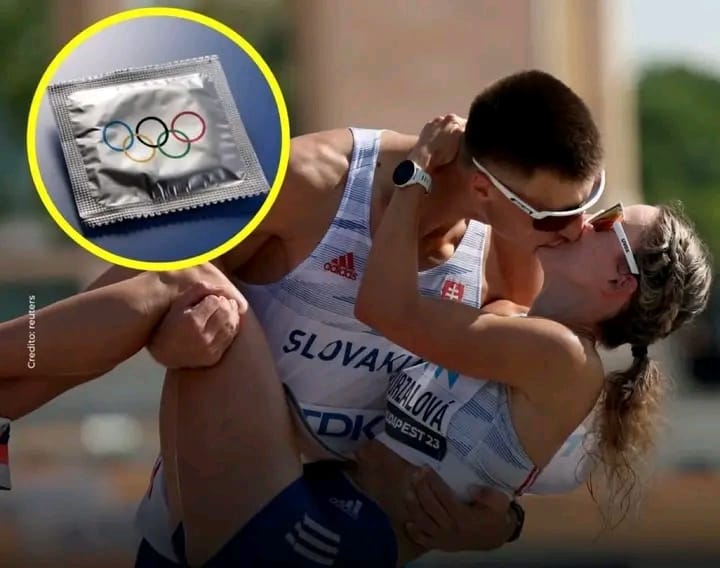
Although it is the Winter Games, the atmosphere inside the Olympic Village has been anything but cold since the opening days of the 2026 Winter Olympics.
Only a few days into the competition, organisers faced an unexpected logistical issue: the Olympic Village ran out of free condoms in just three days — a pace that quickly drew global attention. Italian newspaper La Stampa reported that about 10,000 condoms had been distributed to athletes competing across Milan and Cortina d’Ampezzo, but the supply was exhausted before the first week concluded.
READ MORE: LaLiga: Real Madrid beat Rayo Vallecano as Mbappe scores twice
One anonymous competitor told the outlet that the stock vanished rapidly, adding that organisers had promised a new shipment but had not confirmed when it would arrive.
A Familiar Olympic Tradition — With an Unusual Twist
Providing free condoms at the Olympics is a long-standing public-health measure, first introduced during the 1988 Seoul Olympics at the height of the global AIDS crisis. Since then, condom distribution has become standard practice in Olympic Villages, reflecting the need to promote sexual health among athletes living together in close quarters for extended periods.
What made the Milan-Cortina edition unusual was not the policy itself but the limited scale of the supply. By comparison, organisers at the Paris 2024 Summer Olympics reportedly made around 300,000 condoms available, while the record remains the 2016 Rio Olympics, where roughly 450,000 were distributed.
READ MORE: Ghana 0-4 France: Black Princesses crash out of U-20 World Cup
Italy’s Winter Games allocation was significantly smaller — fewer than 10,000 units — even after factoring in the reduced number of competitors.
Demand Outpaces Expectations
Approximately 2,871 athletes are taking part in Milan-Cortina, compared with more than 10,500 competitors at Paris 2024 and over 14,000 participants and officials combined. Despite the smaller athlete population, demand surged quickly, depleting supplies almost immediately.
The shortage soon became a major talking point within the village and across international media — not only for its humorous undertone but also for the glimpse it offered into the social dynamics behind the scenes of elite sport. While free protection for athletes has long been routine, running out before the opening week ended inevitably sparked headlines worldwide.

Edem Kwame
Chief Editor
Edem Kwame is a staff journalist at GH News Media, where he covers news, sports, politics and current affairs with a sharp focus on Ghanaian and African football.