The 'human-only' economy: 7 high-paying jobs AI can’t replace in 2026

Artificial intelligence is transforming industries at an unprecedented pace, automating repetitive tasks and reshaping the global workforce. However, rather than eliminating human relevance, AI is revealing a powerful truth: some roles are fundamentally human. This shift has given rise to what experts describe as the “human-only economy”—a segment of high-value jobs where human intelligence, emotional depth, and physical presence remain irreplaceable.
In 2026, the most secure and lucrative careers are no longer defined by technical efficiency alone but by uniquely human capabilities such as empathy, creativity, ethical judgement, and complex decision-making. While AI excels at processing data and performing predictable tasks, it struggles with ambiguity, emotional nuance, and accountability. As a result, certain professions continue to thrive—and even grow in value—despite rapid technological advancement.
1. Surgeons & Specialised Doctors
Healthcare remains one of the strongest human strongholds in the AI era. Surgeons and specialised doctors operate in high-stakes environments where real-time decisions can determine life-or-death outcomes. While AI can support diagnostics and assist with data analysis, it cannot replicate human judgement, ethical responsibility, or the ability to respond intuitively during complex procedures. The need for accountability and patient trust ensures that medicine remains a deeply human profession, making it both highly respected and financially rewarding.
2. Psychologists, Therapists & Mental Health Experts
Mental health professionals are increasingly indispensable in today’s fast-changing world. Psychologists and therapists rely on emotional intelligence, empathy, and trust-building to guide individuals through complex personal challenges. Although AI tools can simulate conversations, they lack genuine understanding, cultural sensitivity, and the ability to form meaningful human connections. This makes mental health care a future-proof field with growing global demand and strong earning potential.
READ MORE: University of Ghana to make AI training mandatory for all students
3. Creative Directors & High-Level Storytellers
Creativity remains one of the most powerful human advantages. Creative directors, writers, and brand strategists are responsible for shaping narratives that resonate deeply with audiences. While AI can generate content, it often lacks originality, emotional depth, and cultural awareness. Human creatives bring lived experience, intuition, and vision into their work—qualities that allow them to produce impactful and memorable stories that machines cannot authentically replicate.
4. Cybersecurity Experts & Ethical Hackers
As technology evolves, so do the threats that come with it. Cybersecurity experts play a critical role in protecting systems, data, and digital infrastructure from increasingly sophisticated attacks. This field requires strategic thinking, adaptability, and the ability to anticipate human behaviour on the other side of the screen. AI can assist in monitoring threats, but it cannot fully replace the intuition and decision-making required to counter unpredictable cyber risks, making this a highly valuable and secure career path.
5. Skilled Trades (Electricians, Engineers & Technicians)
In contrast to many office-based roles, skilled trades are proving highly resistant to automation. Electricians, engineers, and technicians work in dynamic physical environments where conditions are constantly changing. These roles require hands-on expertise, quick problem-solving, and adaptability—areas where AI and robotics still face significant limitations. As a result, skilled trades are not only stable but are increasingly recognised as high-paying and essential professions in modern economies.
6. Leadership Roles (CEOs, Managers & Entrepreneurs)
Leadership remains a uniquely human domain that extends far beyond data analysis. Executives, managers, and entrepreneurs are responsible for setting vision, inspiring teams, and making critical decisions in uncertain environments. While AI can provide insights and forecasts, it cannot lead people, build trust, or take responsibility for outcomes. The complexity of human dynamics ensures that leadership roles will continue to command high value and influence in the AI-driven world.
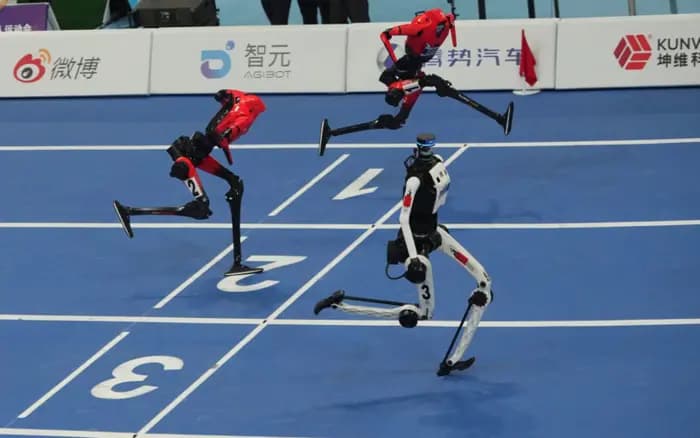
READ MORE: Chinese humanoid robot breaks 100m record
7. AI Strategists & Human-AI Integration Specialists
Ironically, one of the safest careers in the age of AI is working directly with it. AI strategists and integration specialists bridge the gap between technology and human needs by designing systems that enhance productivity without replacing human input. They ensure ethical implementation, oversee performance, and align AI tools with business objectives. Since AI cannot fully manage or regulate itself, these professionals play a crucial role in shaping the future of work.
Final Insight: The Rise of Human Advantage
The concept of the human-only economy highlights a critical shift in the global job market. The most secure and high-paying careers are no longer those based purely on technical efficiency but those rooted in human strengths—empathy, creativity, adaptability, and leadership.
As automation continues to expand, the key to long-term success lies in developing skills that machines cannot replicate. The future belongs to individuals who can combine technical awareness with deeply human capabilities, positioning themselves not in competition with AI, but in collaboration with it.

Edem Kwame
Chief Editor
Edem Kwame is a staff journalist at GH News Media, where he covers news, sports, politics and current affairs with a sharp focus on Ghanaian and African football.