US officially leaves the World Health Organization
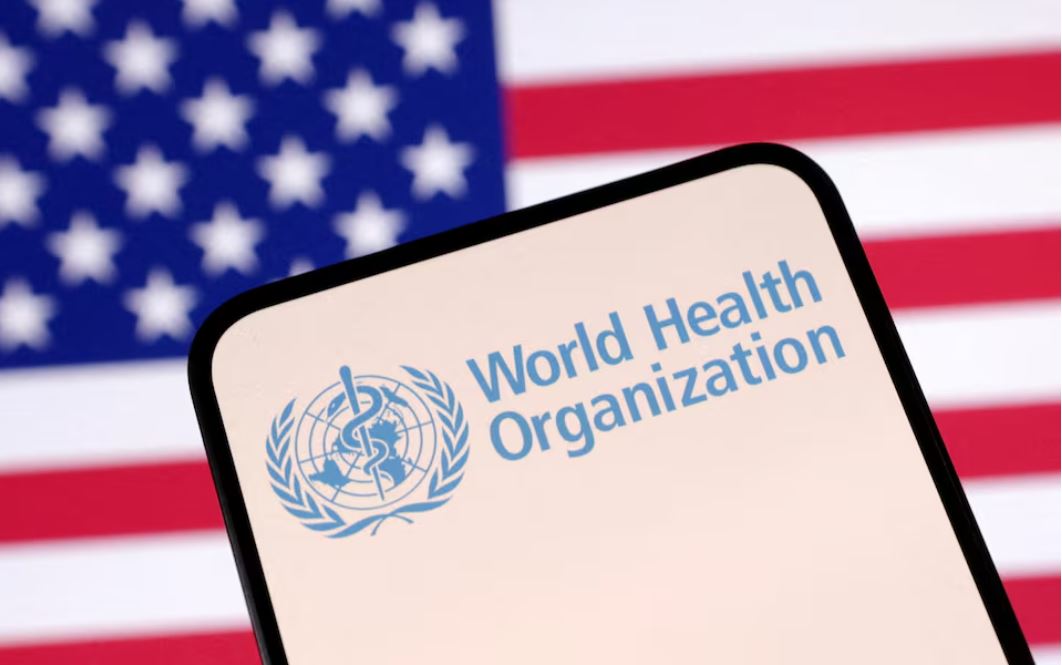
The United States has formally withdrawn from the World Health Organization (WHO), bringing to an end a year-long process that global health experts repeatedly warned would have serious consequences for public health in the U.S. and worldwide.
Washington said the decision reflects what it described as longstanding failures in the UN health agency’s leadership and its handling of the COVID-19 pandemic.
President Donald Trump initiated the withdrawal on his first day back in office in 2025, signing an executive order notifying the WHO of the U.S. intention to exit. On Thursday, that withdrawal became official.
In a joint statement, the U.S. Departments of Health and State confirmed that the United States will maintain only minimal, transitional engagement with the WHO to complete the exit process.
“We have no plans to participate as an observer, and we have no plans to rejoin,” a senior U.S. health official said. Going forward, the administration said it will prioritize direct bilateral cooperation with individual countries on disease surveillance and public health initiatives, rather than working through multilateral institutions.
Dispute over outstanding payments
Under U.S. law, the country is required to provide one year’s notice and settle all outstanding financial obligations—estimated at about $260 million—before leaving the organization. However, U.S. officials have challenged the interpretation that payment is a legal precondition for withdrawal.
READ MORE: NHIA pays GH¢281.66m claims to health facilities
“The American people have paid more than enough,” a State Department spokesperson said, arguing that previous contributions had not delivered sufficient value.
The Department of Health and Human Services (HHS) confirmed that all U.S. funding to the WHO has now been terminated. According to HHS, President Trump exercised his authority to halt future transfers of U.S. resources, citing claims that the agency’s actions during the pandemic imposed massive economic costs on the United States.
Witnesses in Geneva reported that the U.S. flag had been removed from outside WHO headquarters on Thursday, symbolizing the formal end of the relationship.
Wider implications for the United Nations
The U.S. exit from the WHO comes amid a broader withdrawal from several UN-affiliated bodies. Analysts have warned that these moves, alongside the administration’s newly established Board of Peace, could weaken the overall authority and effectiveness of the United Nations system.
While some critics of the WHO have floated the idea of creating an alternative global health body, a policy document reviewed by the Trump administration last year recommended instead pushing for internal reforms and stronger U.S. leadership within the existing organization.
Global reaction and legal concerns
Over the past year, international health leaders—including WHO Director-General Dr. Tedros Adhanom Ghebreyesus—had appealed to the U.S. to reconsider. The WHO has stated that the United States still owes membership fees for 2024 and 2025.
The issue is expected to be discussed at the WHO Executive Board meeting in February, where member states will examine the legal and financial implications of the U.S. departure.
READ MORE: Kylian Mbappe believes 2026 could be his year to win the Ballon d'Or
“This is a clear violation of U.S. law,” said Lawrence Gostin, director of the O’Neill Institute for Global Health Law at Georgetown University. “But the administration is highly likely to proceed regardless.”
Bill Gates, chair of the Gates Foundation and a major global health donor, said he does not expect a reversal in the near term but will continue to advocate for renewed U.S. participation. “The world needs the World Health Organization,” Gates said.
Impact on global health
The U.S. withdrawal has triggered a significant financial crisis within the WHO. The agency has already reduced its senior management team by half, cut programs across multiple departments, and announced plans to lay off roughly a quarter of its workforce by mid-year.
Historically, the United States has been the WHO’s largest single contributor, providing approximately 18 percent of its total funding.
Global health experts warn that the decision could weaken international systems designed to detect, prevent, and respond to future health emergencies.
“The U.S. withdrawal from WHO risks undermining the collaborations the world depends on to manage global health threats,” said Kelly Henning, public health program lead at Bloomberg Philanthropies.
As the WHO adjusts to a new financial and operational reality, questions remain over how global health coordination—and U.S. engagement in it—will function in the years ahead.
Edem Kwame
Chief Editor
Edem Kwame is a staff journalist at GH News Media, where he covers sports, politics, news and current affairs with a sharp focus on Ghanaian and African football.