10 oldest universities in Africa
Africa is home to some of the oldest centres of higher learning in the world, institutions that were training scholars in theology, law, mathematics and astronomy centuries before Europe's oldest universities existed.
From the mosque-universities of North Africa to the manuscript libraries of Timbuktu, these institutions shaped intellectual life across the continent long before colonial rule. Here are 10 of the oldest universities in Africa, their founding dates, and what they look like now.
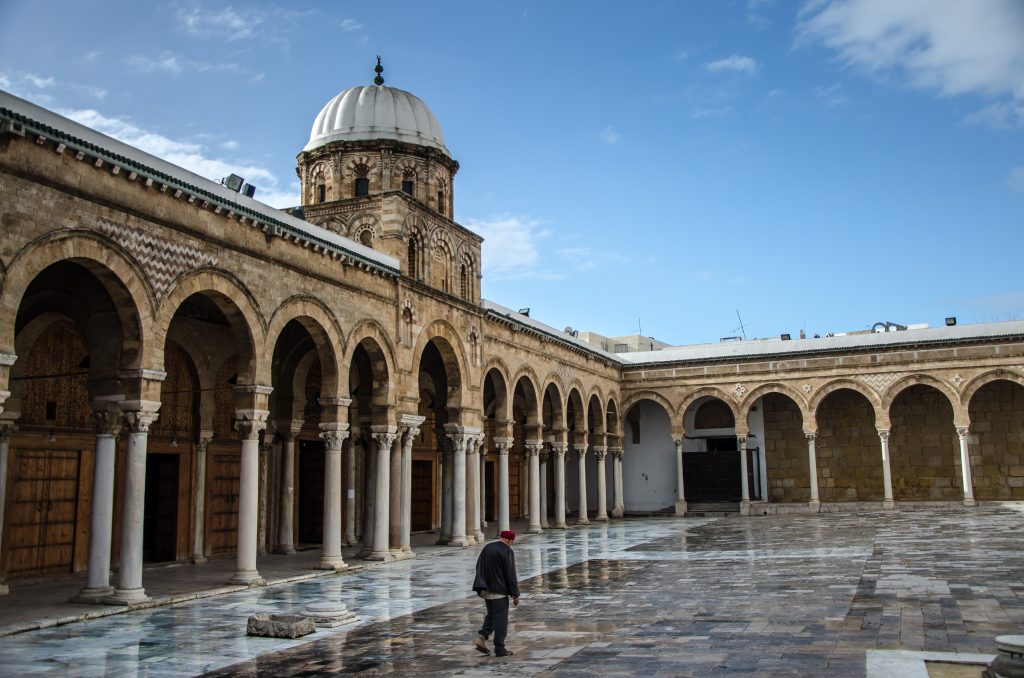
1. Ez-Zitouna University, Tunisia — 737 AD
Founded in Tunis as a mosque and centre of Islamic learning, Ez-Zitouna grew into one of the world's oldest institutions of higher education, teaching theology, law and Arabic grammar for over a millennium. It has survived numerous wars and political upheavals throughout Tunisian history, including the Crusades and the Tunisian Civil War. Today, Ez-Zitouna University remains an active institution in Tunis, continuing to specialise in Islamic studies and jurisprudence.
2. University of Al Quaraouiyine, Morocco — 859 AD
Founded in Fez by Fatima al-Fihri, a woman who used her inheritance to build the institution, Al Quaraouiyine is recognised by UNESCO and Guinness World Records as the oldest continuously operating degree-granting university in the world. It began as a school attached to a mosque before expanding into subjects such as mathematics, foreign languages and natural sciences. It remains an active public university in Morocco today, admired both for its academic legacy and its status as the world's first university founded by a woman.
3. Al-Azhar University, Egypt — 970 AD
READ MORE: 10 Oldest Cities in Africa: History and founding dates
Established in Cairo shortly after the founding of the city itself, Al-Azhar grew into one of the most prestigious centres of Islamic scholarship in history, teaching theology, law and the Arabic language. Although it did not formally gain modern university status until the 20th century, its influence on Islamic education across Africa and the Middle East has been immense. Al-Azhar University remains one of the most respected Islamic institutions in the world today, drawing students from across the globe.
4. University of Timbuktu, Mali — 982 AD
Formed around three major mosques in Timbuktu — Sankore, Djinguereber and Sidi Yahya — the University of Timbuktu became a renowned centre of Islamic and academic scholarship during the Mali and Songhai empires. It produced thousands of manuscripts on subjects ranging from astronomy to law, drawing scholars from across West Africa and the wider Islamic world. Today, the Sankore mosque and its manuscript libraries stand as UNESCO World Heritage sites, though preserving Timbuktu's ancient texts remains an ongoing challenge.
5. Fourah Bay College, Sierra Leone — 1827
Founded by Christian missionaries in Freetown, Fourah Bay College became the first Western-style university in Sub-Saharan Africa, established to train teachers and evangelists. It later affiliated with Durham University in the United Kingdom before becoming fully independent in 1966. Today, Fourah Bay College operates as a constituent college of the University of Sierra Leone, retaining its place as one of West Africa's oldest academic institutions.
6. University of Cape Town, South Africa — 1829
Originally founded as the South African College, this institution evolved into the University of Cape Town and became the oldest university in South Africa. It grew into one of the continent's most prestigious research universities, counting notable South African leaders among its alumni. UCT remains consistently ranked among the top universities in Africa today, known for its research output and academic standing.
7. University of Fort Hare, South Africa — 1916
READ MORE: Top 10 Most Spoken Languages in the World 2026 Ranked
Established as the South African Native College, Fort Hare became one of the most influential universities on the continent, educating generations of African political leaders during the colonial and apartheid eras. Its alumni include figures central to Africa's liberation movements, including Nelson Mandela and Robert Sobukwe. Today, the University of Fort Hare continues to operate in South Africa's Eastern Cape, carrying forward its legacy as a cradle of African leadership.
8. University of Khartoum, Sudan — 1902
Founded as Gordon Memorial College during the colonial period, this institution was reorganised and formally established as the University of Khartoum when Sudan gained independence in 1956. It grew into Sudan's largest and most prestigious university, producing generations of the country's political, academic and professional leaders. The University of Khartoum remains one of the top-ranked universities in East Africa today.
9. Cairo University, Egypt — 1908
Established originally as the Egyptian University before later name changes, Cairo University became Egypt's first modern secular university, distinct from the religious institution of Al-Azhar. It grew rapidly into one of the largest universities on the continent, with a student population numbering in the hundreds of thousands. Cairo University remains one of the most prominent and highly ranked universities in Africa and the Arab world.
10. Makerere University, Uganda — 1922
Founded as a technical school before evolving into a full university, Makerere became East Africa's leading centre of higher education during the colonial period, later offering degrees affiliated with the University of London. It played a central role in training the region's political and academic elite in the decades leading up to independence. Today, Makerere University is Uganda's largest and most prestigious university, with a reputation that extends across East Africa.
Edem Kwame
Chief Editor
Edem Kwame is a staff journalist at GH News Media, where he covers sports, politics, news and current affairs with a sharp focus on Ghanaian and African football.