
THE TROTRO PHARMACIST: SELF-MEDICATION CRISIS IN GHANA
By Gifty Tackie
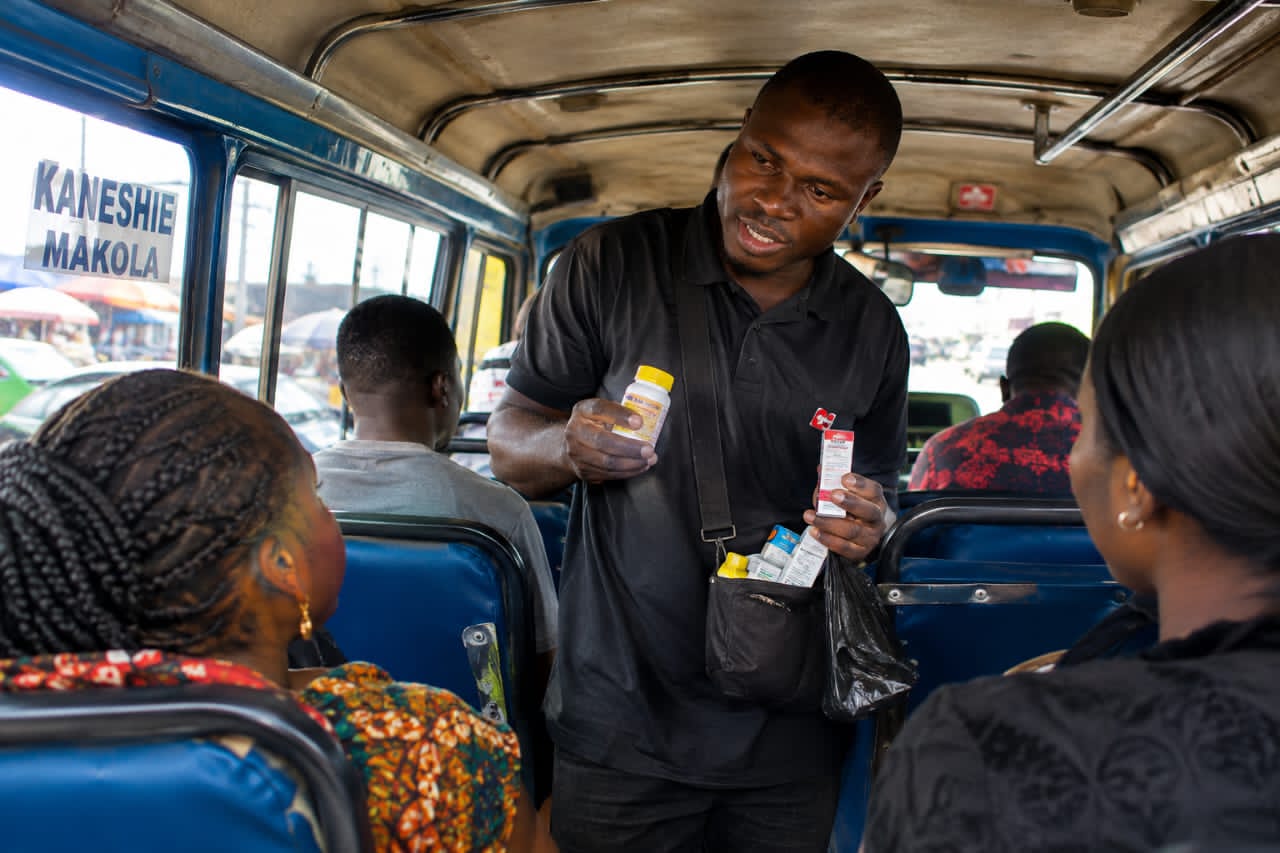
We board a trotro (public minibus transport in Ghana), thinking we are just passengers heading to work, the market, or home. Then, somewhere between the first and second bus stops, someone stands.
He greets the bus and reaches into a small bag to begin advertising his medicine. He promises relief for everything from headaches and waist pain to infections and unnamed illnesses.
On long buses like the “Awoo Yomo” from Kaneshie to Makola, mobile drug sellers are a constant presence.
While these vendors sell both orthodox and traditional medicines that appear convenient and affordable, they often operate without prescriptions or regulatory oversight.
This everyday scene reflects a major public health concern in Ghana: the rise of self-medication. This is the practice of treating self-diagnosed illnesses without a doctor’s advice.
From busy urban terminals to rural lorry stations, some commuters rely on medicines bought in public transport and markets to manage common health problems.
Some passengers say these medicines work for them. One commuter recalled buying a traditional medicine in a trotro to treat a recurring condition.
“It helped me,” he said. This experience is why he continues to trust such sellers.
READ MORE: OUR TIME: WHEN THE PAST MEETS THE PRESENT
Others remain cautious. “I’m scared to buy,” another passenger said. “I don’t really know where these medicines come from.”
Health professionals warn that medicines are not ordinary consumer products. Eugenia Korkor Nertey, a licensed pharmacist, explains that professional training is critical because medicines can cause side effects, interact with other drugs, or harm the body when used incorrectly.
“Medicines are not like items you pick from a provision shop,” she says. “They require training to dispense because of dosage, side effects, and possible drug interactions.”
Despite these risks, some people continue to buy medicines outside pharmacies. According to the pharmacist, "Some people believe pharmacy medicines are expensive.” “Others say a friend used it and it worked, so they want the same thing.”
The pharmacist advises the public to seek professional help first.
“Your first point of call should be the community pharmacy,” she says. “If the condition is beyond that, you will be referred to the hospital. Self-medication is something we need to reduce.”
A 2023 study by researcher Albert Asase in the Bono Region found that many herbal medicines are sold without FDA registration.
The study further revealed that most lack basic information, like expiry dates and side-effect warnings.”
Medical studies, including Dr. Ahsan’s 2025 research data on renal health, show that the misuse of over-the-counter painkillers, such as NSAIDs like ibuprofen or diclofenac, can restrict blood flow to the kidneys.
READ MORE: Marriage or Engagement? How Ghana Came to Call Customary Marriage an Engagement
This leads to Acute Kidney Injury (AKI), a condition where the kidneys suddenly stop filtering waste from the blood.
Mr. Danso, a mobile medicine seller, offers remedies for menstrual issues and candidiasis. On his approach, he says, “One is 20 cedis."
However, the Food and Drug Administration (FDA) stresses that selling medicines in troches is illegal because these products are not tested for safety.
Using such unregulated drugs can lead to serious health complications, including permanent kidney damage.
While medicines sold in troches seem convenient, the risks to your health are far too high. Health professionals and the FDA urge the public to stick to licensed pharmacies for their safety.
For Ghana’s commuters, the choice is simple. Convenience should never outweigh your life. Seeking professional guidance is the only safe way to stay well.

Edem Kwame
Chief Editor
Edem Kwame is a staff journalist at GH News Media, where he covers news, sports, politics and current affairs with a sharp focus on Ghanaian and African football.